Avonlea Hall
Anne of AvonleaAvonlea Hall is a village gathering place whose need for a sound roof draws the newly organized Avonlea Village Improvement Society into public work. Its repair brings practical benefit: people can sit inside without rain leaking through the roof. But the campaign’s most memorable result is unintended. A disputed paint order leaves the hall a brilliant blue against its red roof, transforming a modest improvement project into a local byword and, unexpectedly, winning sympathy for the young society.
Setting and Use
The hall stands on the lower road, a route made muddy and wet in late autumn. Travelers going to Carmody generally take the longer upper road instead, and fir woods crowd the building so closely that it cannot be seen until one is near. Its secluded position shapes the circumstances of the painting: Joshua Pye works there in solitude, away from the traffic that might otherwise have exposed the mistake sooner.
The hall serves a practical community purpose beyond its appearance. Before the improvement campaign, its roof needed re-shingling and painting; after the work, people could sit inside without being rained on. The repairs therefore have a plain, tangible success even when the color becomes a spectacle. The narrative keeps those two outcomes in view: the building looks startlingly wrong, but its roof has been renewed.
The Improvement Campaign
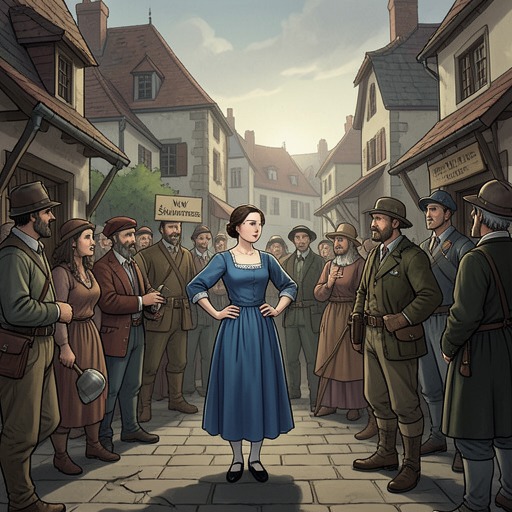
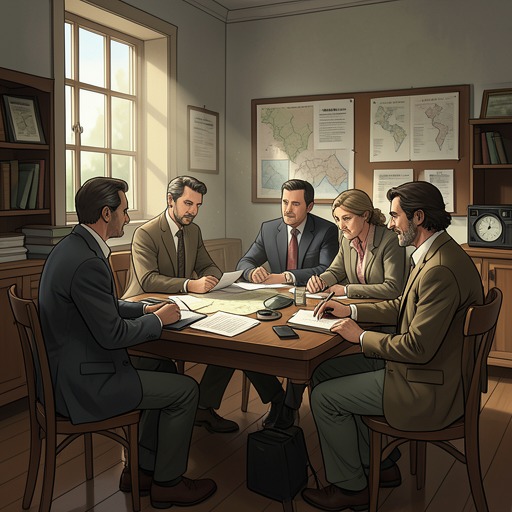
The hall becomes the Avonlea Village Improvement Society’s first substantial project. The society’s officers are Gilbert Blythe as president, Fred Wright as vice-president, Anne Shirley as secretary, and Diana Barry as treasurer. Its members, promptly nicknamed the Improvers, meet every fortnight in members’ homes. Since the season is already late, they recognize that little can be accomplished immediately; their wider plan is to gather ideas and prepare a campaign for the following summer, while educating public opinion.
That ambition meets ridicule as well as disapproval. Some residents imagine the Improvers intend to uproot roadsides for geraniums, dictate how houses should be rebuilt, or impose decorative standards on barns and milk-stands. At their second meeting, held in the Barry parlor, Oliver Sloane moves to raise a subscription to re-shingle and paint the hall, and Julia Bell seconds the motion. The proposal passes unanimously. A committee is appointed, with Jane Andrews as chair and Gertie Pye, Gilbert Blythe, Anne Shirley, Diana Barry, and Fred Wright as members. Its canvassers divide the roads among themselves, matching routes to local connections; Jane and Gertie take the Carmody road, where the Pyes live.
Anne Shirley also makes a separate appeal to J. A. Harrison, who refuses to contribute. Later, she reports that the society has raised enough not only to paint the hall but to shingle the roof as well, adding that most people have given generously. The contrast between that broad support and J. A. Harrison’s refusal underscores that the campaign is not simply an uncontested communal undertaking. Nevertheless, the Improvers secure the funds and arrange for the work to proceed.
The Blue Paint Mistake
The painting itself is entrusted to Joshua Pye, a taciturn and unsociable man. His brother Roger brings the paint home, and Joshua starts the next day, working undisturbed at the hidden hall. He finishes on Friday afternoon and returns to Carmody. Soon afterward, Rachel Lynde drives along the muddy lower road out of curiosity. Rounding a bend, she sees the completed building and reacts with astonishment and laughter.
The Improvers learn that the hall is blue rather than green: a deep, brilliant shade associated with carts and wheelbarrows, set against a red roof. The cause lies in a color-card order. The society wants shade 147, the green it selected, and sends instructions through John Andrew Pye to his father. John Andrew maintains that he passed on the number 147; Roger Pye insists he was told 157. The discrepancy is never resolved. The Improvers pay Roger for the paint after consulting Peter Sloane, a magistrate, who explains that they cannot hold him responsible because he says he was merely given the cans and told to proceed without being told the intended color.
The episode makes the hall’s surface impossible to overlook. Before painting, the building was obscured by firs except at close range; after the wrong shade is applied, its appearance becomes the story people carry away. The improvers’ intended improvement is thus divided between a successful repair and an unmistakable visual failure.
Public Reputation and Lasting Significance
The Improvers expect the mistake to deepen Avonlea’s prejudice against them, but public feeling turns in their favor. Residents see an eager group that worked hard and was unfairly let down. Rachel Lynde urges them to continue. Major Spencer offers, at his own expense, to clear stumps from his roadside frontage and seed it with grass, while Hiram Sloane tells Anne Shirley that her cow will not threaten a possible geranium bed at the crossroads. Even J. A. Harrison, who had earlier refused to subscribe, responds with sympathy, privately amused if at all but outwardly supportive.
The hall’s blue finish consequently acquires a double meaning. It records the limits of good intentions and the fragility of a project dependent on a chain of spoken instructions, but it also makes the society’s earnestness visible to the community. Harrison predicts that the paint will fade into a prettier color, while acknowledging that the roof is properly shingled and painted. Anne Shirley fears that the blue hall will become a byword in neighboring settlements; the narrative confirms that it does. The building’s public notoriety outlasts the committee’s immediate disappointment, while its repaired roof remains a concrete achievement beneath the infamous color.